

Measuring Tools
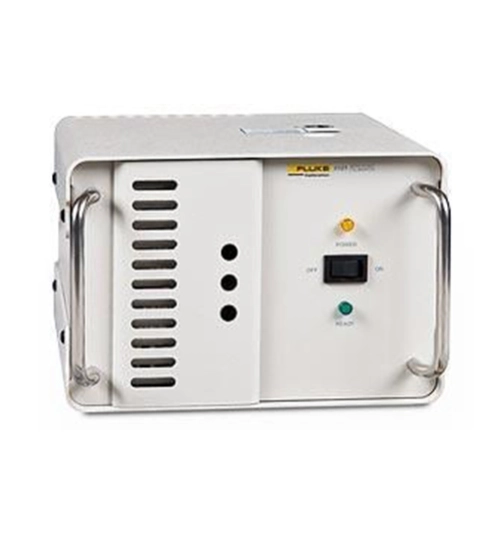
Fluke 9101 Zero-Point Dry-Well
Ice-point reference without the ice
• Bath-quality stability in a portable ice-point reference
• Easy re-calibration for long-term reliability
• Ready-light frees user’s time and attention
• Solid-state cooling technology
Have you been thinking about buying a zero-point dry-well? Forget those ugly-looking units the competition makes. You can get a great looking and great performing zero-point dry-well from Fluke Calibration.
The 9101 has three test wells for inserting more than one probe at a time. All three wells are stable to ±0.005 °C. One well accommodates changeable inserts for varying probe diameters.
• Bath-quality stability in a portable ice-point reference
• Easy re-calibration for long-term reliability
• Ready-light frees user’s time and attention
• Solid-state cooling technology
Have you been thinking about buying a zero-point dry-well? Forget those ugly-looking units the competition makes. You can get a great looking and great performing zero-point dry-well from Fluke Calibration.
The 9101 has three test wells for inserting more than one probe at a time. All three wells are stable to ±0.005 °C. One well accommodates changeable inserts for varying probe diameters.
Download
Produk Lainnya
Keep yourself safe. Find hidden problems faster. Put the paperwork down.
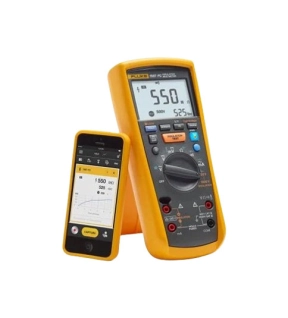
Fluke Connect + Fluke's 1587 FC Insulation Multimeter helps you identify tough problems, fix, and wirelessly communicate your work quickly and easily - all at a safe distance.
Add diagnostics with Fluke Connect
The Fluke 1587 FC is Fluke Connect-enabled so you can download the free Fluke Connect® Measurements app to your smartphone and gain additional functions, including:
- Safety first. Keep yourself out of harm’s way by monitoring your test measurements remotely.
- Prove your job is done right by quickly seeing and sharing measurement results wirelessly with your smartphone.
- Quickly find problems by saving and comparing measurements over time on a wireless device.
- PI/DAR timed ratio tests with TrendIt™ graphs to identify moisture and contaminated insulation problems faster
- Memory storage through Fluke Connect that saves measurements to your phone or the cloud and eliminates the need to write down results. Reduces errors and saves data for historical tracking over time
- Temperature compensation to establish accurate baselines and relevant historical comparisons
- Historical tracking and trending of assets to identify insulation degradation over time and allow real-time decisions to be made in the field with Fluke Connect® Assets (sold separately)
- Provides memory storage through Fluke Connect Measurements to eliminate the need to write down results
- Includes live circuit detection to prevent insulation test if voltage >30 V is detected
- Supports historical tracking and asset trending of assets to identify degradation over time with Fluke Connect® Assets (sold separately)
- Incorporates VFD low-pass filter for accurate variable frequency motor drive measurements
- Includes auto-discharge of capacitive voltage for added user protection
- Measures ac/dc voltage, dc millivolts, ac/dc milliamps, resistance, and continuity
- Includes capacitance, diode test, temperature, min/max, frequency measurements and insulation test smoothing reading
- Automatically powers off to save battery power
- Comes with remote probe, test leads, alligator clips, K-type thermocouple, hard case, and three-year warranty.
Fluke Connect + Fluke's 1587 FC Insulation Multimeter helps you identify tough problems, fix, and wirelessly communicate your work quickly and easily - all at a safe distance.
Add diagnostics with Fluke Connect
The Fluke 1587 FC is Fluke Connect-enabled so you can download the free Fluke Connect® Measurements app to your smartphone and gain additional functions, including:
- Safety first. Keep yourself out of harm’s way by monitoring your test measurements remotely.
- Prove your job is done right by quickly seeing and sharing measurement results wirelessly with your smartphone.
- Quickly find problems by saving and comparing measurements over time on a wireless device.
- PI/DAR timed ratio tests with TrendIt™ graphs to identify moisture and contaminated insulation problems faster
- Memory storage through Fluke Connect that saves measurements to your phone or the cloud and eliminates the need to write down results. Reduces errors and saves data for historical tracking over time
- Temperature compensation to establish accurate baselines and relevant historical comparisons
- Historical tracking and trending of assets to identify insulation degradation over time and allow real-time decisions to be made in the field with Fluke Connect® Assets (sold separately)
- Provides memory storage through Fluke Connect Measurements to eliminate the need to write down results
- Includes live circuit detection to prevent insulation test if voltage >30 V is detected
- Supports historical tracking and asset trending of assets to identify degradation over time with Fluke Connect® Assets (sold separately)
- Incorporates VFD low-pass filter for accurate variable frequency motor drive measurements
- Includes auto-discharge of capacitive voltage for added user protection
- Measures ac/dc voltage, dc millivolts, ac/dc milliamps, resistance, and continuity
- Includes capacitance, diode test, temperature, min/max, frequency measurements and insulation test smoothing reading
- Automatically powers off to save battery power
- Comes with remote probe, test leads, alligator clips, K-type thermocouple, hard case, and three-year warranty.
The NEW standard for rugged
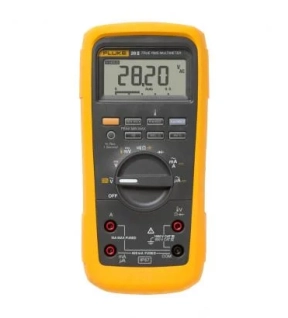
The Fluke 27 II and 28 II digital multimeters set a new standard for operation in harsh conditions with the features and accuracy to solve most electrical problems. Both gauges are IP 67 rated (water and dust repellent), MSHA approved, extended operating temperature range of -15°C to +55°C (5°F to 131°F, -40°C for s /s 20 minutes) and 95 % humidity, and has been designed and tested to withstand a 3 m (10 ft) drop. The Fluke 20 Series Multimeter is designed to work in the toughest environments.
The Fluke 27 II and 28 II digital multimeters set a new standard for operation in harsh conditions with the features and accuracy to solve most electrical problems. Both gauges are IP 67 rated (water and dust repellent), MSHA approved, extended operating temperature range of -15°C to +55°C (5°F to 131°F, -40°C for s /s 20 minutes) and 95 % humidity, and has been designed and tested to withstand a 3 m (10 ft) drop. The Fluke 20 Series Multimeter is designed to work in the toughest environments.
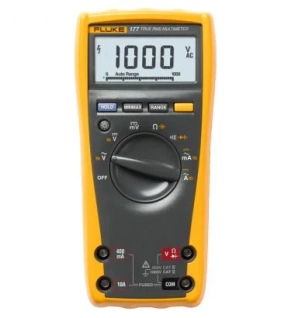
The three models of the new 170 Series are the new benchmark for common multimeters. All three set the standard with their combination of precision, features, ease of use, safety and reliability
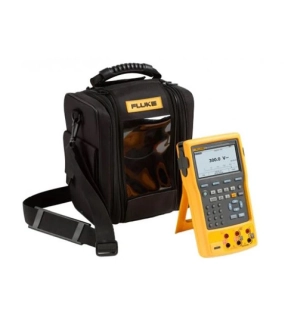
Portable multi-function calibrator simplifies calibration work
Whether you're calibrating instruments, troubleshooting a problem, or running routine maintenance, the Fluke 754 with HART® communication can help you get the job done faster. It does many different tasks quickly and it's the only process calibrator you need to carry. This rugged, reliable, integrated communicating calibrator is ideal for calibrating, maintaining, and troubleshooting HART smart transmitters and other instrumentation.
Measurement and source capabilities:
- AC/DC voltage
- mA loop w/ 24V loop power
- Pressure
- Thermocouples & RTDs
- Frequency
- Resistance
Enhanced process calibrator operation
Whether you're calibrating instruments, troubleshooting a problem, or running routine maintenance, the Fluke 754 with HART® communication can help you get the job done faster. It does many different tasks quickly and it's the only process calibrator you need to carry. This rugged, reliable, integrated communicating calibrator is ideal for calibrating, maintaining, and troubleshooting HART smart transmitters and other instrumentation.
Measurement and source capabilities:
- AC/DC voltage
- mA loop w/ 24V loop power
- Pressure
- Thermocouples & RTDs
- Frequency
- Resistance
Enhanced process calibrator operation