
a a a a a a a a a a a a
Distributor Fluke
Distributor Fluke
Customer Services
(021) 2908-5810
/
628111042805
Measuring Tools

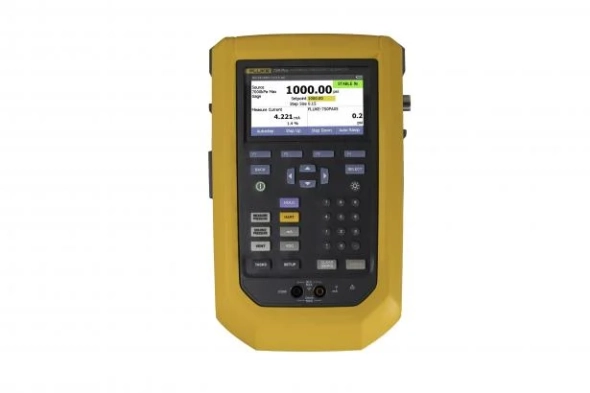
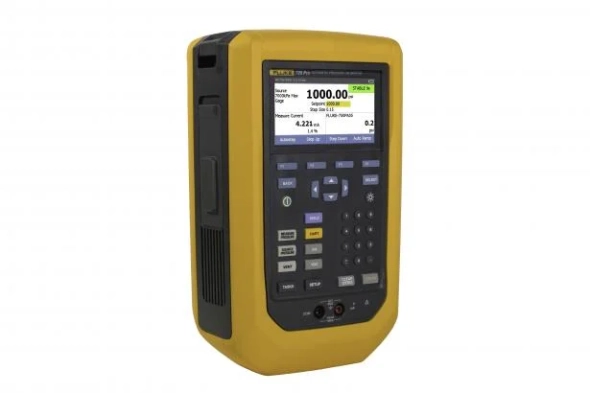
Fluke 729 Pro Automatic Pressure Calibrator

Fluke 729 Pro Automatic Pressure Calibrator not only simplifies pressure calibration but saves time, reduces errors and improves accuracy. With plug-in replaceable pressure control modules, the pressure generation and regulation could be up to 1000psi, 7Mpa.

- Fluke 729Pro Automatic Pressure Calibrator 600 psi

- FLK-PMM-4000K

- FLK-PMM-200K (Optional)

- FLK-PMM-200KA (Optional)

- FLK-PMM-2000K (Optional)
Download
Produk Lainnya
729 Automatic Pressure Calibrator
Fluke 729 Automatic Pressure Calibrator
Automatically generates and controls pressure up to 300 psi (20 bar, 2 MPa). Enter the pressure and the 729 will automatically pump to the desired pressure. Fill out the test template and the 729 will automatically pump and document pressure calibration tests at multiple points.


Easy calibration documentation using predefined templates for transmitters and switches. Enter the initial and final test pressures and the number of test points. The rest of the 729 did by documenting the applied pressure, the measured mA, and the % error of each test point. The bright color graphics display will highlight the tolerance test results in red.


Automatic fine adjustment of internal pressure helps compensate for minor leaks in hoses and test settings. There is no need to manually turn the vernier to check for leaks, helping to eliminate the hassle of manual pumping and manual fine adjustment of test settings.


HART communication allows trimming of mA output, trimming to applied value, and trimming to zero pressure from HART pressure transmitters. You can also perform light configuration tasks such as changing transmitter tags, units of measurement, and setting ranges. Other supported HART commands include setting a fixed mA output for troubleshooting, reading device configurations and variables, and reading device diagnostics.


Measures mA signal at transmitter source output and simulates mA signal for testing I/Ps and other mA loop devices. Includes a 24V loop power supply to test and power transmitters in self-tests not connected to a control system.


Rugged portable case design 3 year warranty sets the 729 apart from most other pressure calibrators. The 729 is tested and guaranteed to withstand a 1 meter drop test, making it ready for field instrumentation calibration work.


Fluke Connect® compatibility allows users to remotely monitor using the Fluke Connect mobile app as well as manage and store pressure measurements and log events. Share measurements using ShareLive™ video calls and email.


Measure temperature with the optional 720RTD probe to perform resistance transfer calibration.


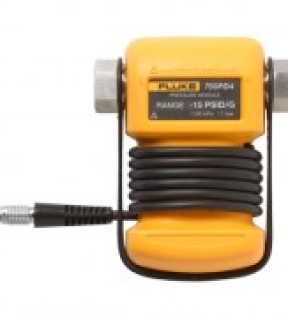
Measure pressure with the old 700 Series and new 750 Series pressure modules if a different pressure measurement range or resolution is desired.


Multiple language support : select the language from the instrument setup utility. Hart communication commands are limited to English per HART device description and protocol.


The rigid yet flexible carrying case is designed for field work, with room in the bag for storing, test hoses, fittings, test cables and small tools needed for field pressure calibration.


Portable automatic pressure calibrator makes pressure calibration easy


The Fluke 729 Automatic Pressure Calibrator has been specifically designed with the work of process technicians in mind to simplify the pressure calibration process and provide faster, more accurate test results. Technicians know that calibrating pressure is a time-consuming task, but the 729 makes it easier than ever with an internal electric pump that generates and adjusts pressure automatically in a rugged, easy-to-use portable package.


The 729's ideal portable pressure calibrator, allows you to simply enter a target pressure, and the calibrator will pump automatically at the desired set point. Then, an internal fine adjustment control automatically stabilizes the pressure at the set value.


The Fluke 729 can also test multiple pressure test points automatically and automatically document the results. Calibration is as simple as entering the initial and final pressures as well as the number of test points and tolerance levels. The remaining 729 do.


Built-in HART communication capability allows for mA tuning of HART transmitters, lightweight HART configuration, and the ability to adjust to applied 0% and 100% values.


Upload and manage documented calibration results with DPCTrack2™ Calibration Management Software, making it easier to manage your instrumentation, create scheduled tests and reports, and manage calibration data.


With three selectable ranges, 30 psi (2 bar, 200 kPa), 150 psi (10 bar, 1 MPa), and 300 psi (20 bar, 2 MPa), the Fluke 729 Automatic Pressure Calibrator is designed to work anytime, anywhere. wherever you need it.


30 psi range, 2 bar, no wireless communication
417D Laser Distance Meter
Fluke 417D Laser Distance Meter
- The Fluke 417D laser meter is accurate, durable, and easy to use—just point and shoot

- Instantly measure up to 40 m (131 ft.) with 1-button point-and-click

- Continuous measurement capable: adjusting as you move closer and farther from your target

- Quickly calculate area (sq feet/meters)

- 1-meter drop tested and IP54 rated: built to withstand rainy or dusty conditions

- Great for interior and exterior applications
1777  ThreePhase Power Quality Analyzer
Fluke 1777 - Three-Phase Power Quality Analyzer
Automatic measurements. More flexibility. Better power quality troubleshooting.


Fluke 1770 Series Three-Phase Power Quality Analyzers eliminate the complexities of power quality logging, troubleshooting, and analysis. Engineered to be the faster, easier way to perform power quality studies, the 1770 Series offers automatic measurements, a straightforward user interface and setup, best-in-class specifications, and a simplified reporting platform. The instrument can also be powered directly from the measurement circuit, eliminating the need to find a power outlet or use a lengthy extension cord.


With the 1770 Series you’ll never miss a critical power quality event—from fast transients up to 8 kV, harmonics up to 30 kHz, dips and swells, as well as the voltage, current, and power measurements that enable you to characterize your electrical system.


Automatic measurement capture


Whether you’re performing a quick system check or a detailed power quality study, consistent data is key. The Fluke 1770 Series offers a unique automatic measurement capture system that helps ensure you’re collecting the right data every time, while still giving you the flexibility to select and adjust specific parameters as needed. More than 500 power quality parameters are captured by default and the guided setup makes it easy to select the right parameters for the system you’re working on. Logged data is instantly viewable, downloadable, and shareable with Fluke Energy Analyze Plus software so you never need to wait to finish a session before reviewing results or analyzing data.


Ultimate measurement confidence


The Fluke 1770 Series are 2-in-1 devices that combine the troubleshooting functionality of a power quality meter with the robust analysis and logging capabilities of a standalone power quality analyzer—in a single, easy-to-use, handheld device.


The ‘PQ Meter’ function gives you immediate access to live onscreen data in the field so you can quickly identify potential problems while troubleshooting. The detailed ‘PQ Logging and Analysis’ function eliminates the complexity of performing power quality studies by guiding you through the setup process ensuring you’re capturing the right data every time. Couple these measurement modes with a unique measurement connection autocorrect function and you can be confident that you never need to worry about going back for a second measurement—even if you were unsure about what to look for when you started.


Powerful analysis software with easy-to-create reports


Fluke 1770 Series Power Quality Analyzers come standard with the powerful Fluke Energy Analyze Plus software, designed to eliminate the hassles found with other multi-purpose application software. Energy Analyze Plus helps you evaluate power quality data right out of the box and without extensive training.


Energy Analyze Plus makes downloading, analyzing, tracking, and reporting power quality and energy data easier than ever. Quickly compare results to historical values, benchmark against industry norms, compare measured data to local conditions, and create a more complete picture of what’s occurring across your facility, even as the data is still being collected. Energy Analyze Plus offers unified support for the Fluke 1730, 1740, and 1770 Series of Energy Loggers and Power Quality Analyzers.


“In-workshop” and “in-the-field” setup and download through PC application software

Simple data downloads using USB memory stick, WiFi, LTE, wired Ethernet, or USB cable

Analyze every measured detail of energy consumption and power quality state-of-health with automated reporting


One-touch reporting creates standardized reports conforming to standards like EN 50160, IEEE 519, GOST 33073 IEC 61000-2-2, or export data in PQDIF or NeQual compatible format or CSV for use with third-party software


Advanced analysis allows the user to choose any available logged parameter and create a highly customized view of measurements for advanced data correlation


High-speed voltage transient capture


Transients negatively impact otherwise healthy systems every day and their potential to damage your equipment can’t be underestimated. Whether your system is experiencing impulsive or oscillatory transients, the results can be devastating and cause problems ranging from insulation failures to total equipment failures. The Fluke 1775 and Fluke 1777 incorporate advanced transient capture technology to help you clearly identify high-speed voltage transients, so you have the data you need to stop them in their tracks. The Fluke 1775 Power Quality Analyzer has 1MHz sampling capability to capture fast transients, while the Fluke 1777 Power Quality Analyzer has 20MHz sampling capability to capture the fastest transients in high detail.


Compliant to international standards


The Fluke 1770 Series offers the best-in-class accuracy you’ve come to expect from a Fluke Power Quality Analyzer in a future IEC 61000-4-30 Class A edition 3 compliant package. On top of that, the 1770 Series has been engineered to meet the future requirements of Class A edition, for conformance to EN 50160 and IEEE 519, so you’ll be prepared to tackle tomorrow’s measurement requirements, today.
MDA550 Series III Motor Drive Analyzer
Fluke MDA-550 Series III Motor Drive Analyzer
Simplify complex motor drive troubleshooting with guided test setups and automatic drive measurement that provide reliable, repeatable test results.

The Fluke MDA 550 Motor-Drive Analyzer saves time and the hassle of setting up complex measurements, and simplifies the troubleshooting process. Simply select a step-by-step guided test and measurement will show you where to make voltage and current connections, while preset measurement profiles ensure you will get all the data you need for every critical motor drive part, from input to output, the DC bus, and the motor itself . Doing simple to complex measurements? MDA-550 can do it. What's more, making reports before (as-found) and after (as-left) repairs or adjustments becomes more practical. This is all thanks to its built-in report generator feature.


The MDA-550 is an ideal portable motor drive analysis testing tool. Not only that, this tool can also be used to safely detect and solve common problems in inverter-type motor drive systems.


- Measures main motor drive parameters , including voltage, current, DC bus voltage level and AC ripple, voltage and current unbalance and harmonics, voltage modulation, and motor shaft voltage discharge.

- Performs broader harmonic measurements to identify the impact of low and high order harmonics on your power system.

- Performs guided measurements of motor drive input, DC bus, drive output, motor input, and shaft measurements with step-by-step graphical diagrams of voltage and current connections.

- Uses simple measurement settings with preset measurement profiles to automatically trigger data collection based on the selected test procedure.

- Quickly and easily generate reports that are perfect for documenting problem solving and collaborative work with others.

- Measure additional electrical parameters with a complete 500 MHz oscilloscope, meter and logger capability for a wide range of electrical and electronic measurements in industrial systems


The Fluke MDA-550 Motor Drive Analyzer uses guided test measurements to make analysis even easier


Drive input


Quickly measure input voltage and current to see if values ??are within acceptable limits by comparing the rated voltage to the actual supply voltage. It then checks the input current to determine if the current is within its maximum rating and the conductor size is appropriate. You can also check if the harmonic distortion is within an acceptable level. There are two options for doing this: carefully examine the shape of the waveform or look at the harmonics spectrum screen which displays total harmonic distortion and individual harmonics.


Imbalance of voltage and current


Check the voltage unbalance at the input terminals so you can make sure the voltage unbalance is not too high (> 6-8%), and the phase rotation is correct. You can also check for current unbalance, as too large an imbalance can indicate a driving rectifier problem.


Wider harmonic measurement


Excess harmonics are not only a threat to your rotating machine, but also to other equipment connected to the mains power system. As well as being able to detect motor drive harmonics, the MDA-550 can also detect the potential impact of inverter switching electronics. The MDA-550 has three harmonic ranges, 1st to 51st harmonics, 1 to 9 kHz, and 9 kHz to 150 kHz providing the ability to detect harmonic pollution problems.


Bus DC


In motor drives, the conversion of AC to DC inside the drive is very important. The reason is that for the best drive performance it is necessary to have the right voltage and adequate smoothing with low ripple. High ripple voltages can be an indicator of a faulty capacitor or a faulty motor connected. The logging function can be used to dynamically check the performance of the DC bus in operating mode when load is applied.


Drive output


Check drive output focusing on voltage to frequency (V/F) ratio, and voltage modulation. If the V/F ratio is high, the motor may overheat. With a low V/F ratio, the connected motor may not be able to provide the torque required at the load to carry out the process for which it is intended.


Voltage modulation


Pulse Width Modulation signal measurements are used to check for high voltage peaks that can damage motor winding insulation. The rise time or steepness of the impulse is indicated by a dV/dt reading (value of change in voltage over time), this must be compared with the specified motor insulation. Metering can also be used to measure switching frequency. Its purpose is to detect whether there is a potential problem with the switching electronics, or with grounding, as the signal drifts up and down.


Input Motor


Ensuring the supply of voltage at the motor input terminal is important. However, choosing a connecting cable between the drive and the motor is no less important. Incorrect cable selection can cause damage to the drive and motor due to overvoltage peaks. Checking that the current at the terminals is within the motor's rating is critical because excess current can cause the motor to overheat, reducing the life of the stator insulation which can cause premature failure of the motor.


Motor shaft voltage


The voltage impulse in the variable speed drive is generated from the circuit between the motor stator and the rotor until a voltage appears on the rotor shaft. If the rotor shaft voltage exceeds the insulating capacity of the bearing grease, flashover currents (glow) may occur. As a result, pitting and fluting of the motor bearing rotation occurs, namely damage that causes the motor to fail prematurely. The MDA-550 is equipped with a carbon fiber brushed probe tip that makes it easy for you to detect destructive flashover currents. Meanwhile, the amplitude of the impulse and the number of events can be used as a consideration in taking preventive action. With the addition of these accessories and capabilities, you can spot potential faults without the need to buy expensive permanent solutions.


Step-by-step guided measurements ensure you have the data you need, when you need it


The MDA-550 is designed to help you quickly and easily test and troubleshoot common three-phase and single-phase inverter-type motor drive systems. Onscreen information and a step-by-step setup guide make it easy for you to configure the analyzer. Not only that, the information and guide will also provide the required drive measurements. That way, you can quickly make informed decisions regarding maintenance. From power input to attached motor, the MDA-550 provides measurement capabilities for the fastest motor drive solutions.